I heard so many recommendations to read Julius Caesar on the Conquest of Gaul and Winston Churchill on the Second World War– and the recommendations were right. We’re incredibly lucky that some great wartime leaders also happened to be great writers who chose to take the time to share their perspective on the history they helped make.
I rarely heard Ulysses S Grant mentioned as being in the same class of writer- but after reading his memoirs I think he should be. He was obviously a central wartime leader like they were, the highest-ranking general in the victorious Union army by the end of the US Civil War. But I’d never heard how he was also a great writer. He makes history like the campaigns of the Mexican and Civil wars feel understandable, while also sharing funny human stories. Some of these asides feel like they could have been written by Mark Twain, who did in fact help Grant edit and publish his memoirs.
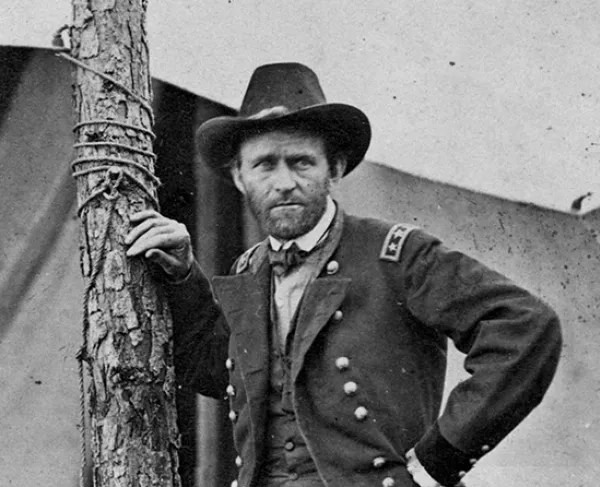
It’s the rare doorstopper book that I wish were much longer- Grant was a two-term US President but his memoirs don’t cover those years at all. I don’t know how much of this is because he wanted to avoid the topic (he’s usually considered a much better general than president) and how much is that he simply ran out of time by dying of cancer.
A few highlights to give you an idea of what Grant was like. Certainly more like a modern economist than I expected:
- In 1839 while he was a student at West Point, Congress debated abolishing the military academies. He hoped they would, so he would get honorably discharged and not have to soldier, he just wanted to be a math professor
- As late as 1845 he still wanted to be a math professor at West Point, thinks he would have been if not for the Mexican War (which he considered unjust, taking advantage of a weaker nation in order to expand slavery)
- While he thought the Mexican war was unjust to start, he thought it was well executed by the US generals. He thought it was both moral and tactically smart that the US troops respected the private property of Mexicans (e.g. paying for any food they took)- it meant that the small US invasion force was just fighting a fairly small and poorly equipped Mexican army, not a whole nation.
- In the Civil War he instituted a similar policy during early fighting in the border states, which he credits with winning over skeptical civilians. But he changed this policy later in the war when fighting in the Deep South, thinking ‘these people will oppose us no matter what, so lets weaken them as much as possible’.
- “Amateurs talk tactics, professionals study logistics” goes a classic quote. Grant is very much a professional by this definition- he served as a Quartermaster (in charge of getting the men food and supplies) in the Mexican war. As a new Colonel in the civil war, he started reading a book on tactics for the first time since West Point and teaching drills with it right away, staying one chapter ahead of the men. Later he fought the guy who wrote the book (Hardee).
- Grant is entrepreneurial as a commander, noticing things like when lots of mule drivers or steam boats are out of work because of the war and could be hired to transport his troops.
- He’s much more aggressive than other commanders in the early part of the war, which brings great success. Captures a series of forts then Nashville, gets dismissed from command and almost arrested because his commanding officers couldn’t get communications from him while he was capturing everything and thought he was ignoring orders. It’s obvious why President Lincoln said “I cannot spare this man; he fights.”
- In fact it seems like it causes him physical pain when he’s ordered to stay on defense. Writing decades later he’s still mad he wasn’t allowed to go after Mobile following the capture of Vicksburg.
- Biggest thing I hadn’t realized about civil war campaigns before this was the importance of the telegraph. Armies usually had them, stringing wires behind them as they marched, helped them coordinate with each other and Washington, though often Grant didn’t appreciate the interference of the War Department. Railroads are another relatively new technology that Grant is always mentioning as critical.
- Overall Grant has modern sensibilities- against slavery, wars of conquest, and bullfights. Main notable exception is calling natives savages.
- Grant didn’t want to annex the parts of Mexico that became the Western US because he thought they were acquired unjustly, but he did want to annex Santo Domingo (now the Dominican Republic) because he thought they wanted to join the US voluntarily and because he thought ‘colored men’ from the US would want to move there.
- Traveling long distances was awful until very recently. Grant fought in two wars, but I think the largest proportion of his men he ever lost was on a peacetime voyage from the US east coast to the US west coast. Today that’s a 1 day flight but in the mid 1800s it meant weeks on a ship plus an overland portage in Panama. Grant was leading an overland portage that got delayed a few days for lack of mules, when 1/3 end up dead from tropical diseases.
Grant’s memoirs are available for free from Project Gutenberg.